If your patio, walkway, or garage floor has faded or gone chalky, the problem may be limited to surface wear rather than requiring full slab replacement. Pitting, flaking, cracking, settlement, or movement deserve a closer look before a coating, stain, or sealer is applied because surface treatments do not correct underlying concrete or drainage problems. This page explains what coatings, staining, and sealing actually do, when each option makes sense, and what needs to happen first.
This covers residential concrete already in place – patios, walkways, garage and carport floors, entry steps, and similar slabs around Waynesboro, Staunton, and Augusta County. New concrete installation and decorative patterns poured into fresh concrete are different projects; see the concrete patios and stamped concrete pages for that.
Call 540-515-4860 for a free concrete coating, staining, or sealing quote.
What's the Difference Between Concrete Coatings, Staining, and Sealing?
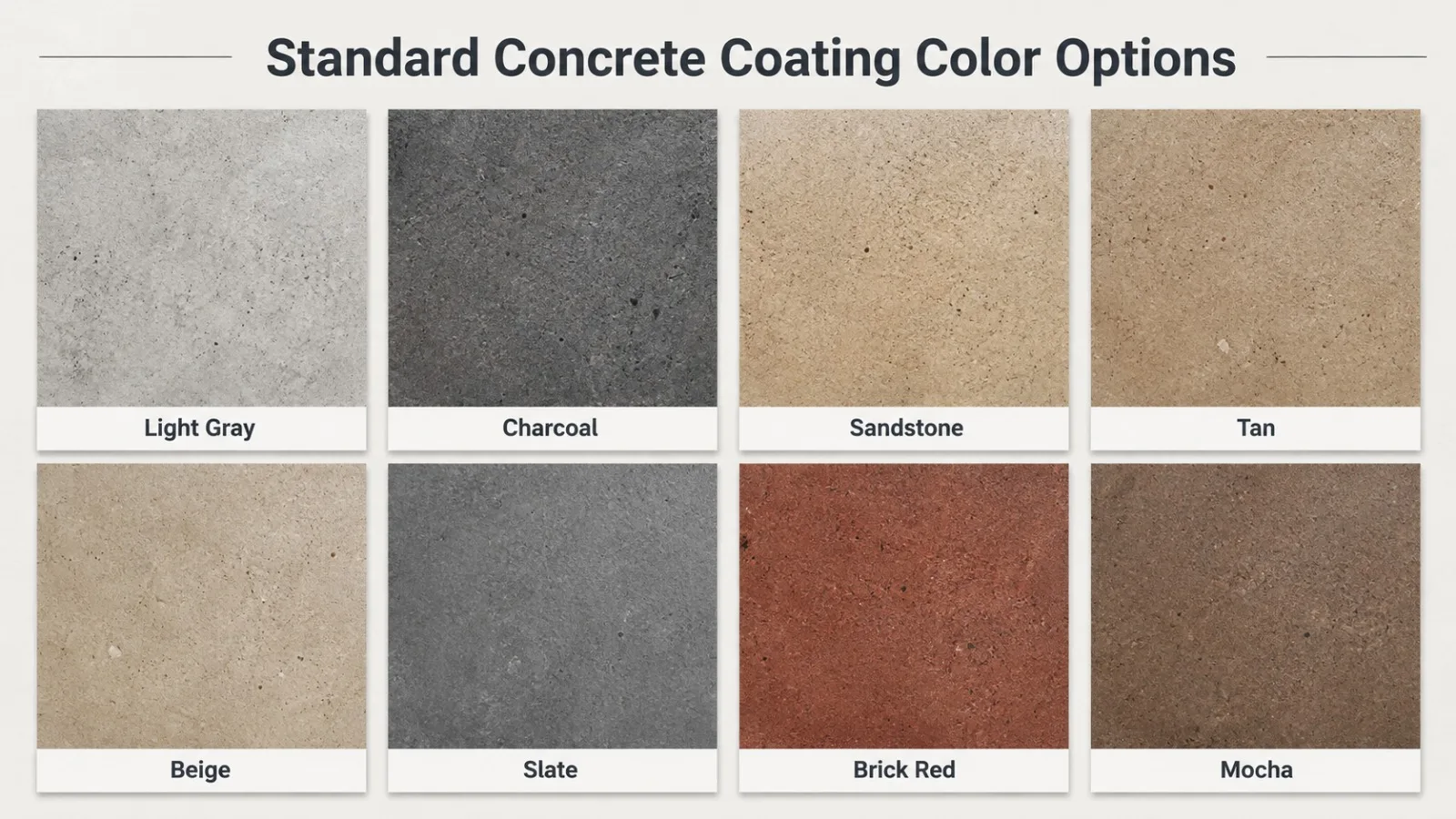
A sealer protects existing concrete without changing its look much. A stain adds translucent color while the concrete’s natural texture still shows through. A coating – usually epoxy, polyaspartic, or polyurea – is a thicker film that, once the surface is properly repaired and prepped, can cover discoloration and surface imperfections more completely than a stain or sealer.
These are not competing options so much as different tools for different problems. A slab with good color and no real damage usually just needs a sealer. Faded or uneven color on otherwise sound concrete is a staining candidate. Discoloration, surface imperfections, or inconsistent appearance that cleaning and light repair cannot resolve usually calls for a coating.
| Sealer | Stain | Coating | |
|---|---|---|---|
| Changes color? | Minimal – a slight sheen | Yes – translucent color, texture still visible | Yes – solid or semi-solid color |
| Covers discoloration or surface imperfections? | No | Partially | Yes, once the surface is repaired and prepped |
| Typical lifespan | Several years for a topical sealer; longer for a penetrating one | Varies by stain type, traffic, exposure, prep, maintenance, and sealer renewal | Often the longest-lasting option – varies by product and traffic |
| Best for | Sound surfaces that just need protection | Faded or uneven color, when you want to keep the texture | Damaged, stained, or inconsistent surfaces – especially garages |
Which Concrete Surfaces Can Be Coated, Stained, or Sealed?
Most exterior residential slabs – patios, walkways, entry steps, garage and carport floors, and covered porch slabs – can be coated, stained, or sealed, as long as the concrete itself is structurally sound. These products protect or improve a surface; they do not correct a slab that is heaving, badly settled, or breaking apart underneath. For new flatwork instead of surface protection, see the concrete slabs page.
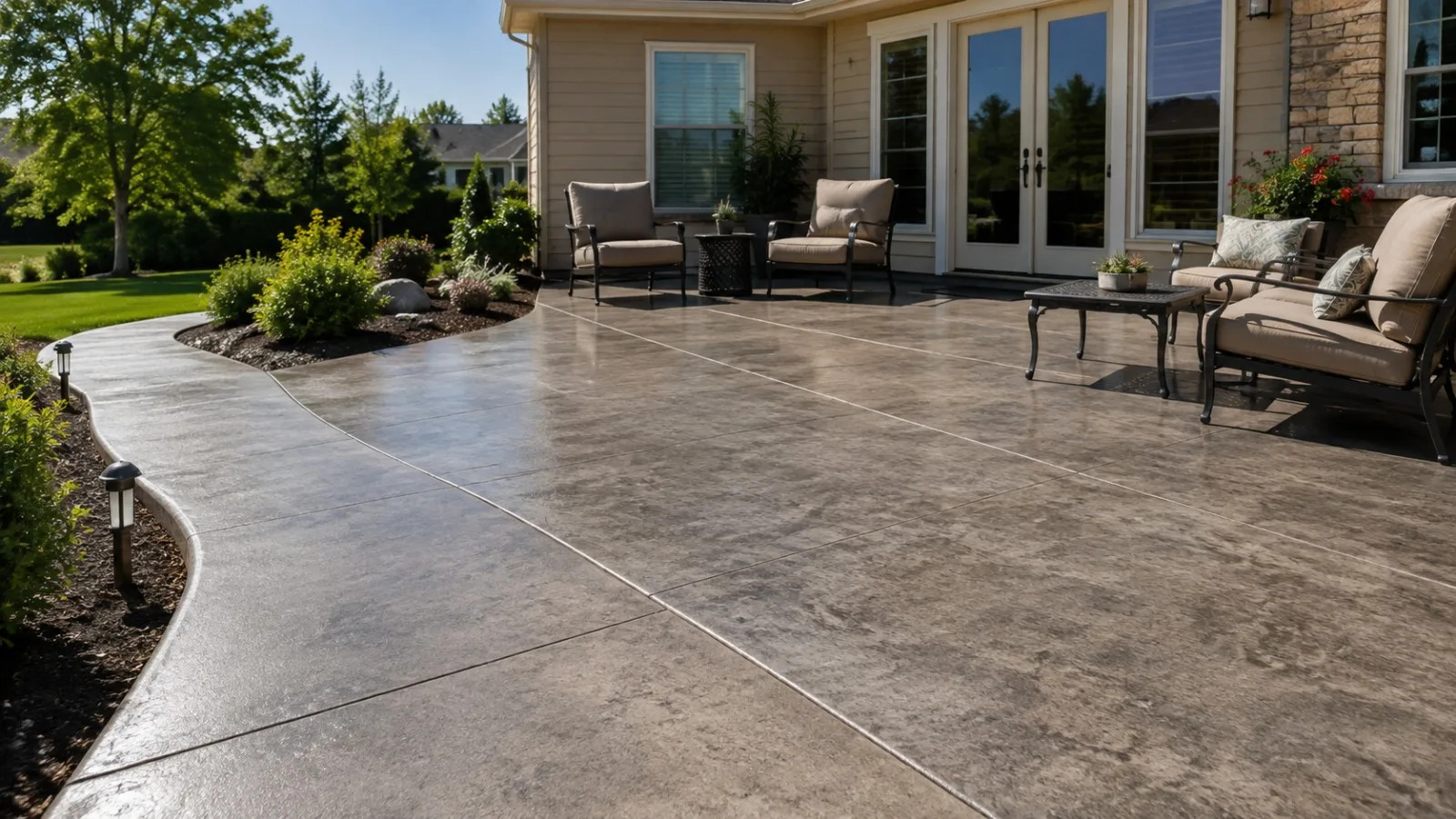
As a general pattern, a patio that has gone gray and chalky from sun and weather is often a sealing or staining candidate, since the concrete underneath can still be sound even when the surface looks worn. A garage floor with heavy staining, pitting, or an inconsistent surface is more often a coating candidate, since coating covers that kind of wear more completely once any damage is repaired and the surface is prepped. Heavier-use exterior areas such as concrete driveways may need a different product choice than a patio or walkway.
What Affects the Cost of Concrete Coating, Staining, or Sealing?
Cost depends on several factors rather than one flat rate. The main ones:
- Square footage – larger areas often cost less per square foot.
- Surface condition – cracks, pitting, or old coatings needing removal add labor.
- Crack and spall repair – damaged sections generally need patching first.
- Surface preparation – grinding, etching, or pressure washing add cost.
- Coating vs. stain vs. sealer – coatings typically cost the most, sealers the least.
- Number of coats – more coats mean more material and labor.
- Moisture problems – a high-moisture slab may need extra prep or a different product.
- Accessibility – a hard-to-reach garage or multi-level patio adds labor.
See the concrete pricing page for a broader cost breakdown. An accurate number requires seeing the surface in person.
What Has to Happen Before Coating or Staining Concrete
Skipping prep is the most common reason coatings and stains fail early. Typical prep includes cleaning, pressure washing and degreasing, especially on garage floors, opening the surface with grinding or etching so the product bonds, and testing for moisture on slabs near grade or over a crawl space. The right combination depends on the product and the manufacturer’s application requirements.
Cracks and Damage That Should Be Repaired or Evaluated First
Hairline cracks can often be routed and filled as part of prep. Wider cracks, cracks with a visible height difference, spalled or flaking concrete, or any sign of movement or settlement should be evaluated before a coating, stain, or sealer is applied – covering an active crack or unstable area does not fix what is causing it, and it usually shows through again within a season or two. Significant settling or heaving points to a foundation or drainage issue, not a cosmetic one.
How Freeze-Thaw Conditions Affect Concrete Coatings and Sealers
The Shenandoah Valley’s winters swing above and below freezing repeatedly rather than staying frozen for weeks at a time. That swing causes freeze-thaw damage: water soaks into pores and hairline cracks, freezes and expands, then thaws and lets in more water, over and over through the season. Unsealed exterior concrete here goes through repeated freeze-thaw cycles most winters – a practical reason to seal a slab even if you are not staining or coating it. Deicing salt adds to the effect, so a sealed or coated slab generally weathers winter better than bare concrete.
How Long Do Concrete Coatings, Stains, and Sealers Last?
Lifespan varies by product, installation quality, and wear, but some general patterns hold. Topical sealers typically need reapplying every two to five years on an exposed patio or walkway; penetrating sealers tend to last longer – often five to ten years – since there is no surface film to wear off. Stained concrete can retain its color for years, but appearance and longevity depend on the stain type, traffic, weather exposure, surface preparation, and maintenance. The protective sealer generally requires periodic renewal, so a stained surface still needs maintenance on a similar schedule. Coatings such as epoxy, polyaspartic, and polyurea are generally the most durable option for a garage floor, often lasting five years or more when properly installed, though actual lifespan depends on the product, substrate prep, and use – confirm expected lifespan against the manufacturer’s specifications rather than assuming products are interchangeable. Watch for a sealer losing its sheen or dulling color as a sign it is due for resealing; for coatings, peeling at an edge or a garage door threshold usually means moisture got underneath, not that the whole coating failed.
Coatings, Staining, or Sealing: Which Fits Your Property?
If the concrete is sound and you like its current look, a sealer alone protects it for the least cost. If the color has faded or gone uneven but you want to keep a natural, textured look, staining followed by a sealer usually fits better. If discoloration or surface imperfections that cleaning and light repair will not resolve are the issue – most often a garage floor – a coating addresses that directly, once any active cracks or damage are repaired first. For walkway-specific guidance, see the concrete sidewalks page.
Serving Waynesboro, Staunton, and Augusta County
This covers concrete coating, staining, and sealing for residential patios, walkways, and slabs in Waynesboro and Staunton, Virginia, and the surrounding Augusta County communities. See the Service Areas page for the full list of communities covered.
Frequently Asked Questions
For questions about new concrete pours, site prep, cure time, and other topics outside this page, see the concrete FAQ.
Can you coat or stain a patio that already has cracks?
Usually, yes, once the cracks are addressed. Hairline cracks are typically routed and filled as part of prep. Wider cracks or ones showing movement should be evaluated first to rule out an underlying issue.
Is epoxy, polyaspartic, or polyurea better for a garage floor?
Each has tradeoffs. Polyaspartic generally cures faster and resists UV yellowing well, useful in a sunlit garage. Epoxy is typically the lower-cost option for an enclosed space. The right fit depends on the product, sun exposure, and manufacturer specifications.
Does stained concrete need to be resealed?
Yes. Stained concrete can retain its color for years, but appearance and longevity depend on the stain type, traffic, weather exposure, surface preparation, and maintenance. The protective sealer generally requires periodic renewal, especially outdoors.
Will sealing my concrete stop water from getting underneath the slab?
No. A sealer keeps water from soaking into the top of the slab, which helps with freeze-thaw damage and staining, but it does not stop water coming from underneath or beside a slab – that is a drainage issue worth evaluating separately.
How long before I can walk or park on a newly sealed or coated surface?
Cure times vary by product. Many sealers allow light foot traffic within hours and cure fully within days; coatings vary more, with some ready for traffic sooner than others. Follow the specific product manufacturer’s instructions.
Can staining even out an old patio’s blotchy color?
Often, yes – staining adds translucent color that evens out faded or uneven areas while keeping the concrete’s natural texture visible. It will not hide cracks or patch repairs, which usually still look somewhat different from the surrounding stain.
What’s the difference between a topical sealer and a penetrating sealer?
A topical sealer sits on top of the concrete as a thin film and may add some sheen. A penetrating sealer soaks into the pores of the concrete rather than forming a visible film on top. It usually changes the appearance very little and can provide longer-lasting protection than some topical sealers, depending on the product and exposure.
Get a Concrete Coating, Staining, or Sealing Quote
An accurate price depends on square footage, current surface condition, and which product fits the job – none of that can be estimated without seeing the surface. Call 540-515-4860 or send your project details through the contact page to describe what you are working with and get a quote.